
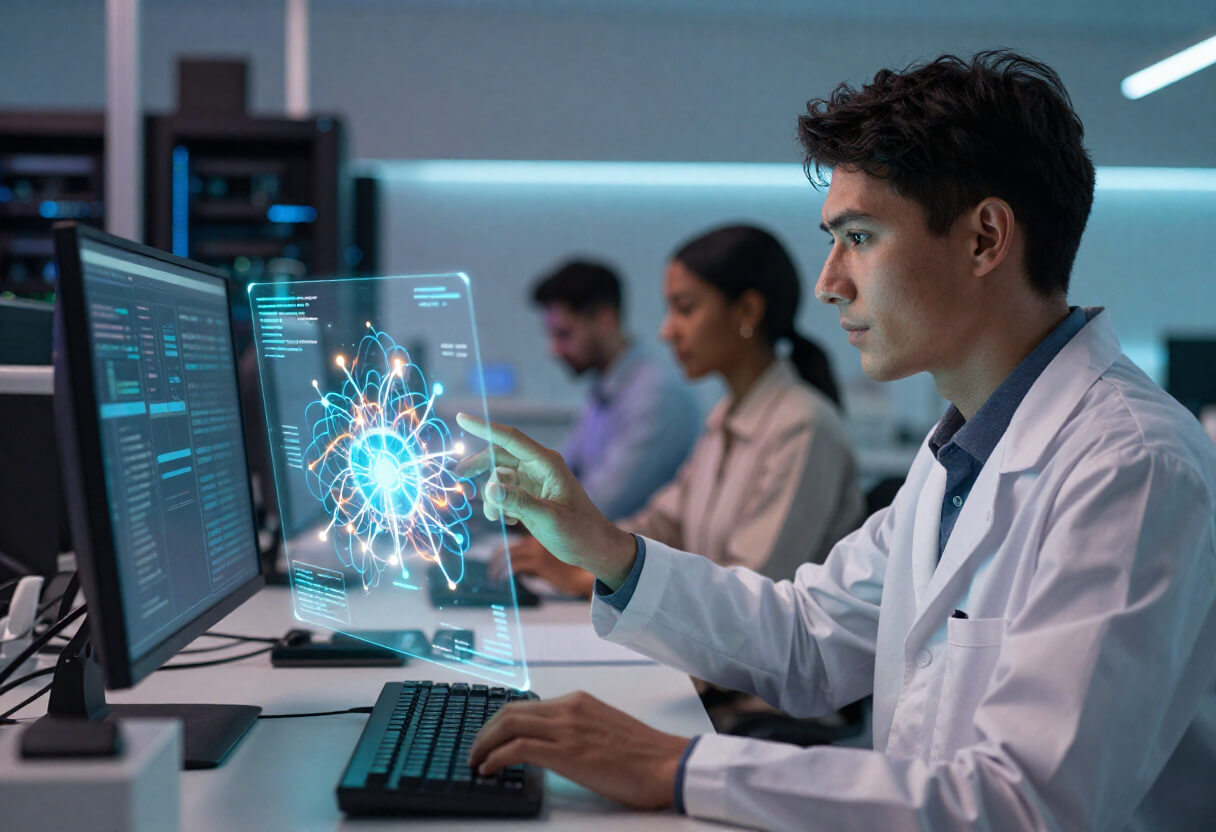
Artificial Intelligence (AI) and Machine Learning (ML) are no longer futuristic concepts—they are the backbone of today’s most powerful technologies. From search engines and recommendation systems to autonomous vehicles and intelligent assistants, AI is fundamentally reshaping how we live, work, and innovate. As we move deeper into 2026 and beyond, the impact of AI is accelerating at an unprecedented pace.
At its core, Artificial Intelligence refers to systems designed to mimic human intelligence, while Machine Learning enables those systems to learn from data without explicit programming. The real breakthrough in recent years has been the rise of Generative AI, capable of creating text, images, videos, music, and even software code. Tools like large language models and multimodal AI systems are redefining creativity and productivity across industries.
One of the most significant transformations is happening in the technology sector itself. Software development is becoming faster and smarter as AI assists developers by writing code, detecting bugs, and optimizing performance. Machine Learning models can analyze massive datasets in seconds, allowing companies to make data-driven decisions that were previously impossible. This shift is reducing development costs while increasing innovation speed.
AI is also revolutionizing business and enterprise operations. Intelligent automation is replacing repetitive manual tasks, freeing employees to focus on strategic and creative work. Customer support is now powered by AI chatbots that operate 24/7, providing instant responses with near-human accuracy. In marketing, AI analyzes user behavior to deliver hyper-personalized content, boosting engagement and conversion rates.
Healthcare is another field where AI and Machine Learning are creating life-changing results. AI systems assist doctors in diagnosing diseases earlier and more accurately by analyzing medical images, patient records, and genetic data. Predictive models help hospitals optimize resources, while AI-driven drug discovery significantly reduces the time required to develop new medicines. These advancements are not replacing doctors—they are empowering them.
Education is rapidly adapting to AI-powered learning systems. Personalized learning platforms use Machine Learning to understand student behavior, strengths, and weaknesses, delivering customized educational content. This approach improves learning outcomes and makes education more accessible globally. Virtual tutors, AI-graded assessments, and smart classrooms are becoming mainstream.
Despite its immense benefits, AI also brings ethical and societal challenges. Issues such as data privacy, algorithmic bias, job displacement, and AI misuse are growing concerns. Responsible AI development is now a global priority. Governments, tech companies, and researchers are working together to establish ethical frameworks, transparency standards, and regulations that ensure AI benefits humanity as a whole.
Looking ahead, the future of AI lies in human-AI collaboration rather than competition. Explainable AI, emotional intelligence in machines, and energy-efficient models will define the next generation of intelligent systems. AI will not just automate tasks—it will enhance human creativity, problem-solving, and innovation.
In conclusion, Artificial Intelligence and Machine Learning are shaping the foundation of tomorrow’s digital world. As these technologies continue to evolve, staying informed is essential for businesses, professionals, and tech enthusiasts alike. The AI revolution is not coming—it’s already here, and it’s transforming everything.